Éva B. Csonka
”temporary utopias”,
her current ongoing artistic process explores human behavior, in which the moment of experimentation is becoming more and more important, while the rules of the game seem to be disappearing.
Interested in the consequences and dangers of digitalization at the moment of personal
perception, she continues this longing and the challenges of trial and error in real time
through sound, light and space.
Losing oneself and letting go is one of the main elements of her works.
About.
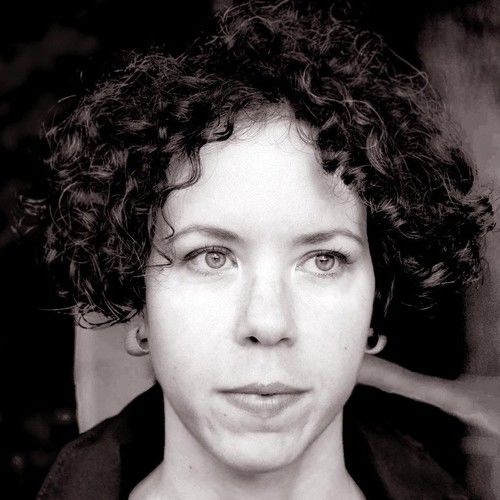
Éva B. Csonka is a Hungarian born Berlin-based artist with a focus on performative sound architectures, live composition and new media. Her work draws from various music genres such as classical, avant-garde and psychedelia. Describes her work as „temporary utopias“, her current ongoing work explores human behavior, in which the moment of experimentation becoming more and more important, while the rules of the game seem to disappearing. Interested in the consequences and dangers of digitalization at the moment of personal perception, she continues this longing and the challenges of trial and error in real time through sound, light and space. Losing oneself and letting go is one of the main elements of her works.
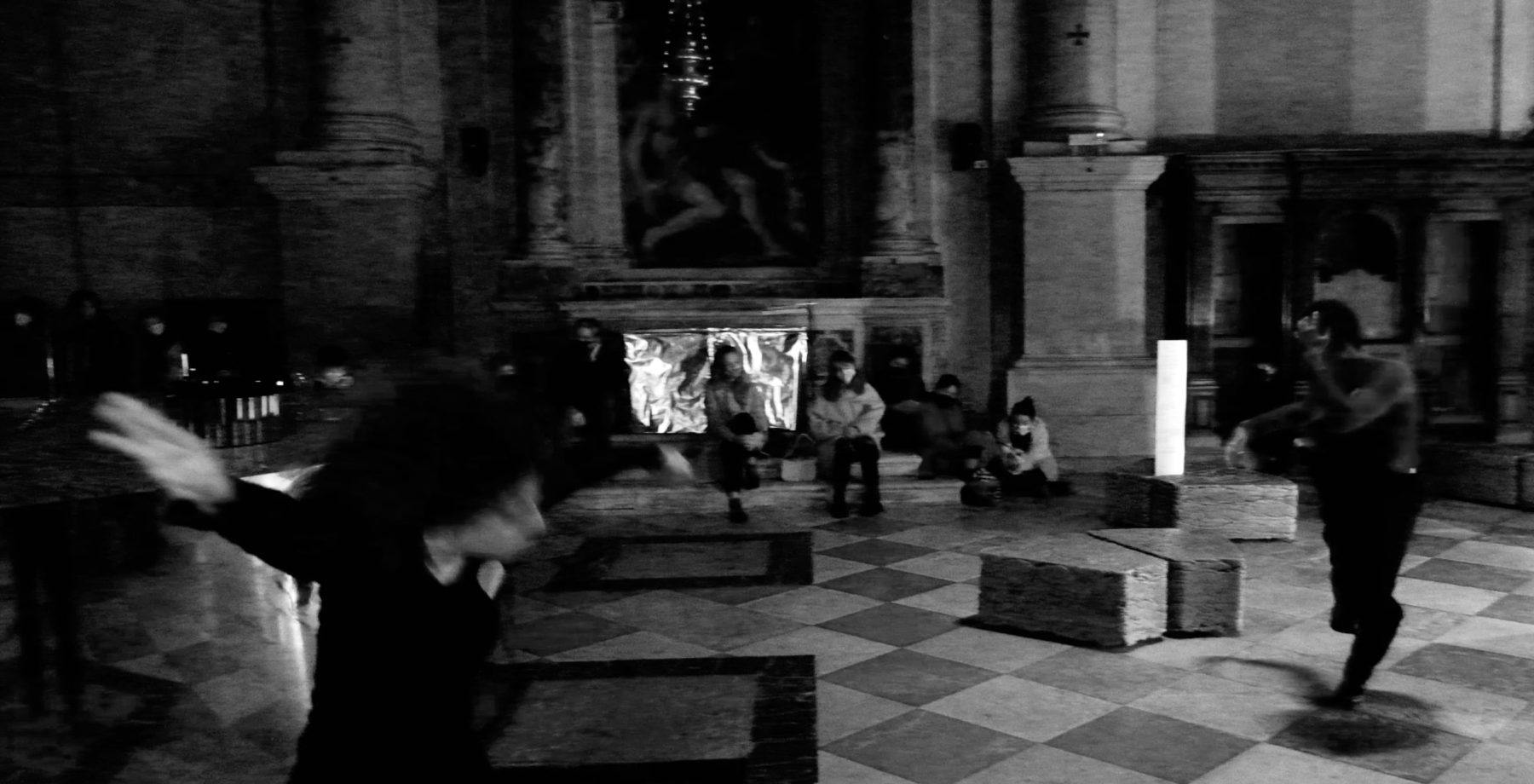
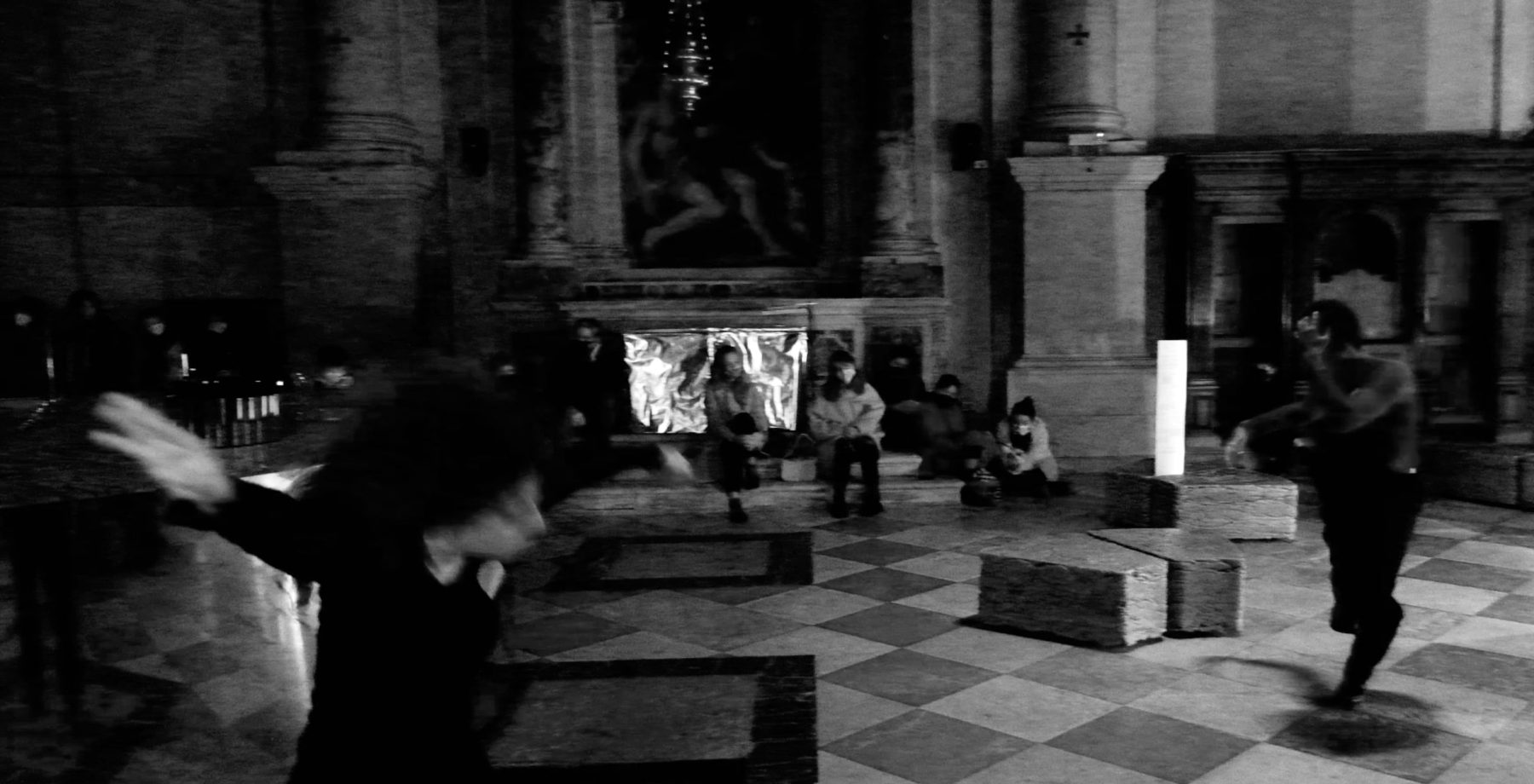
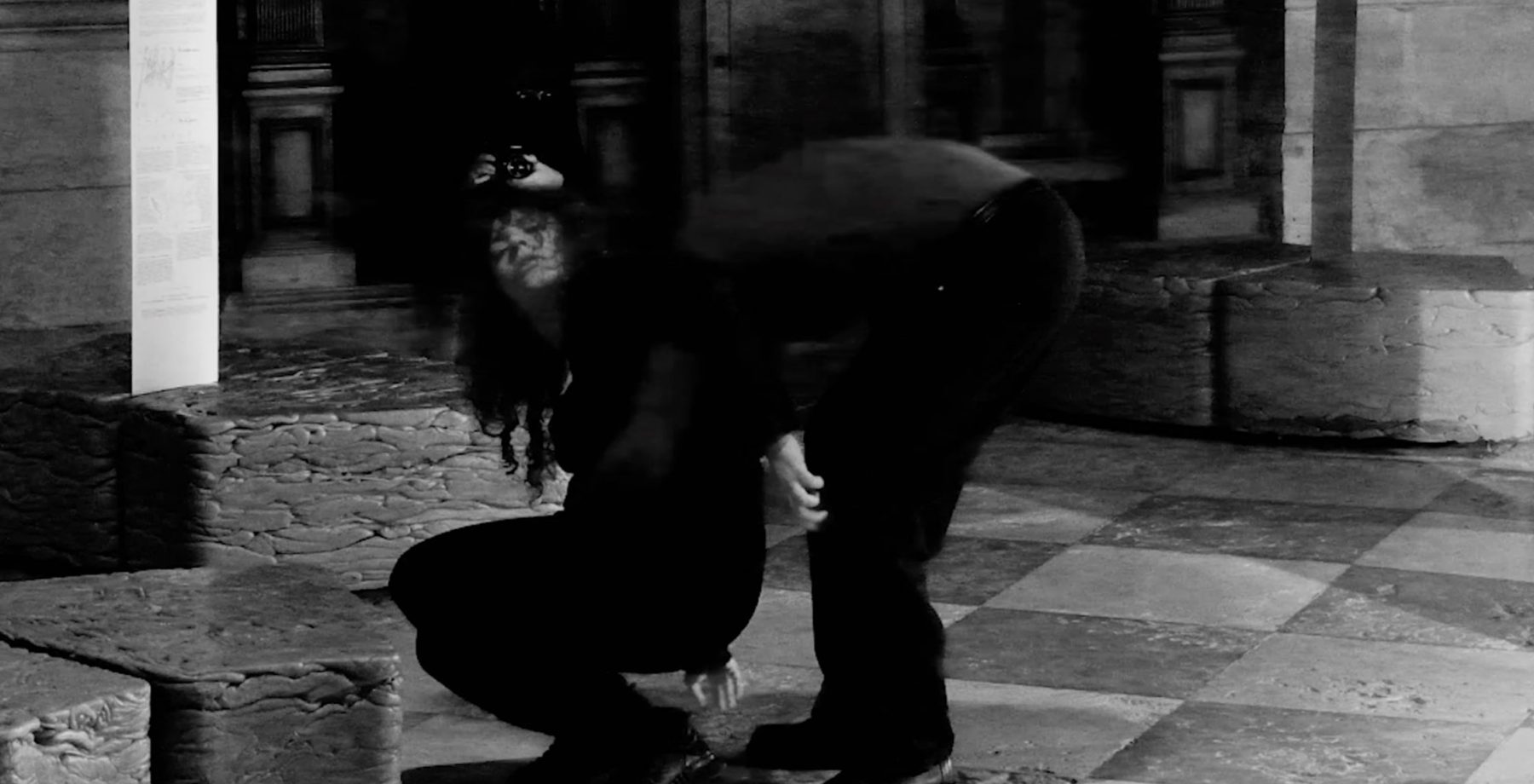
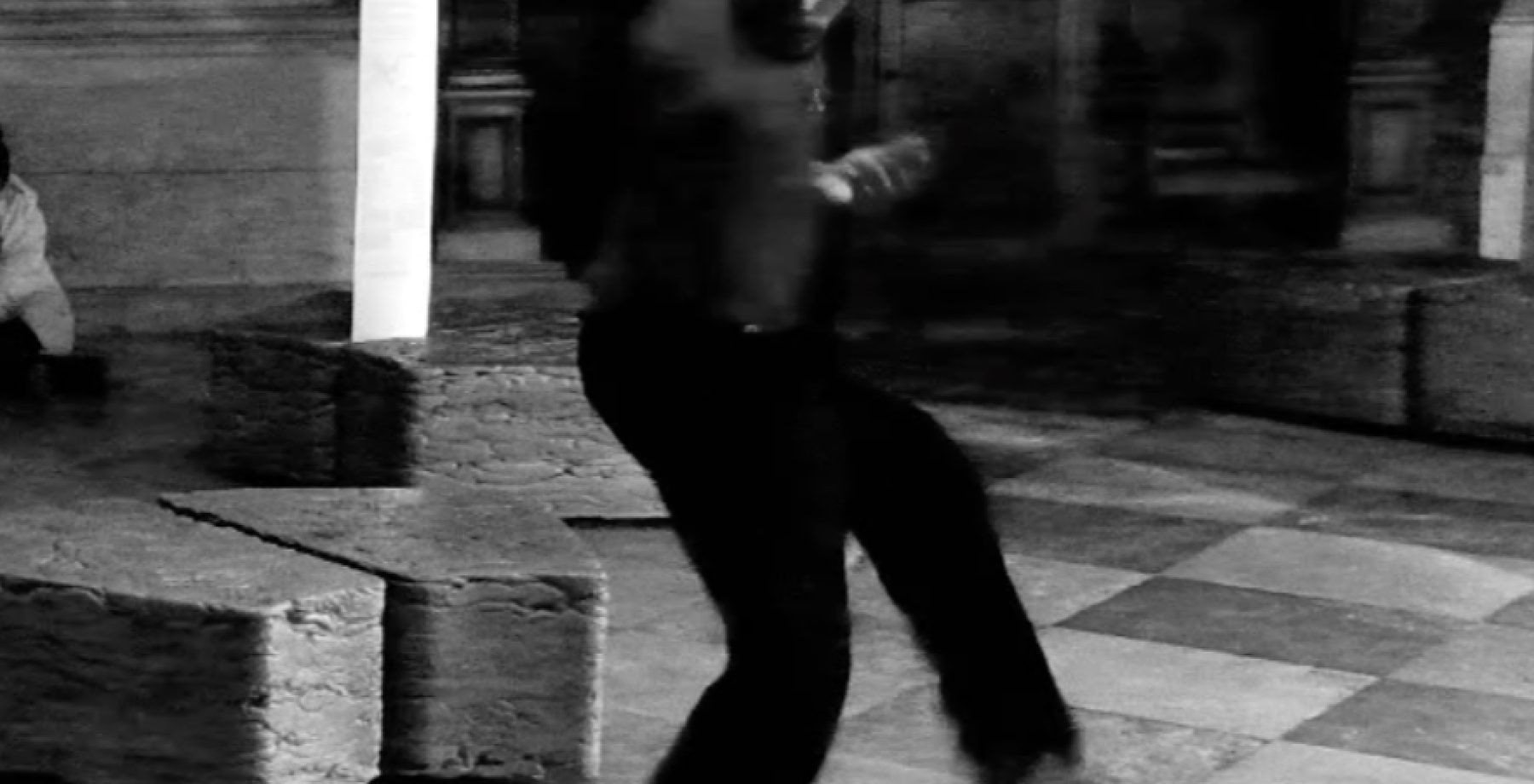
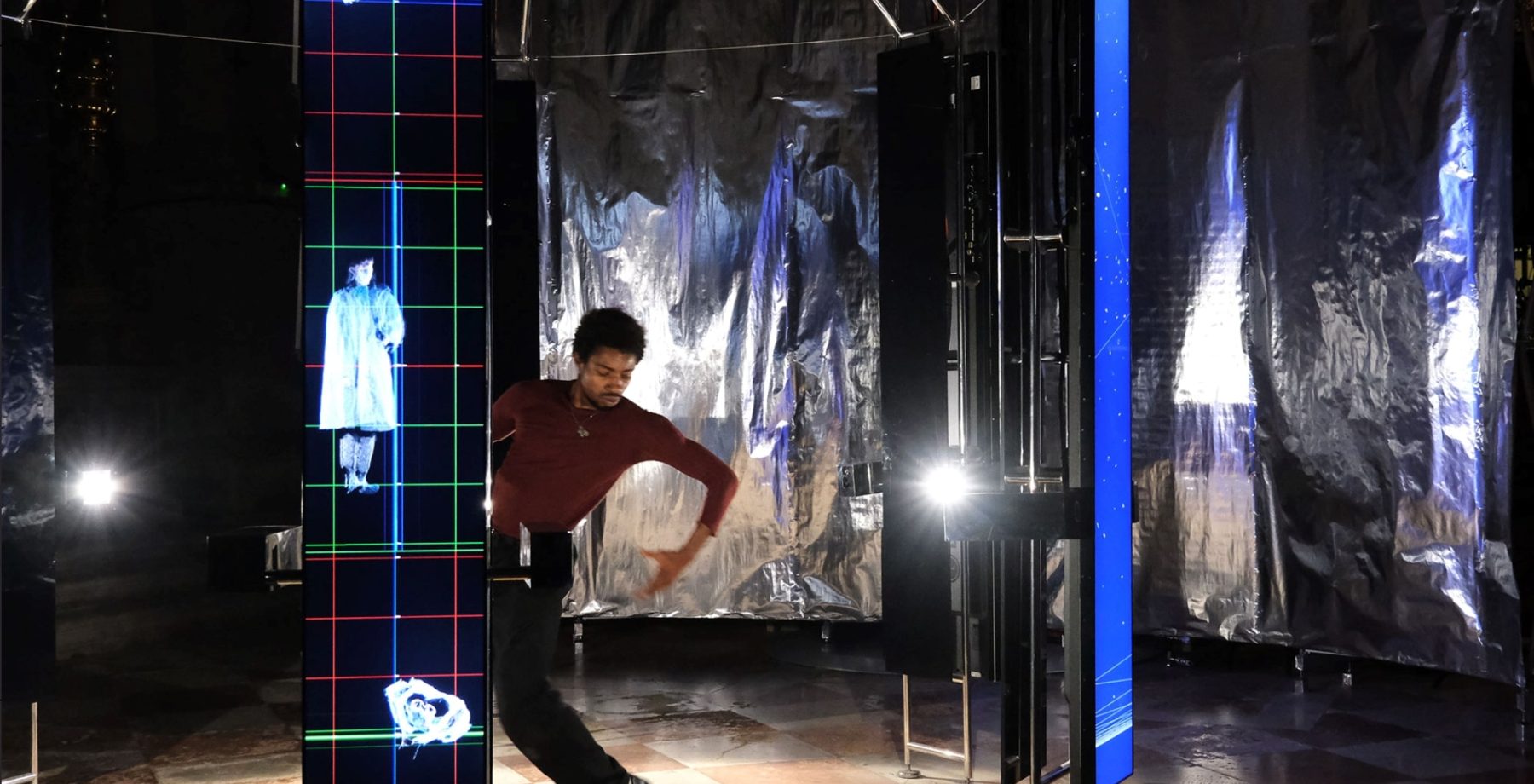
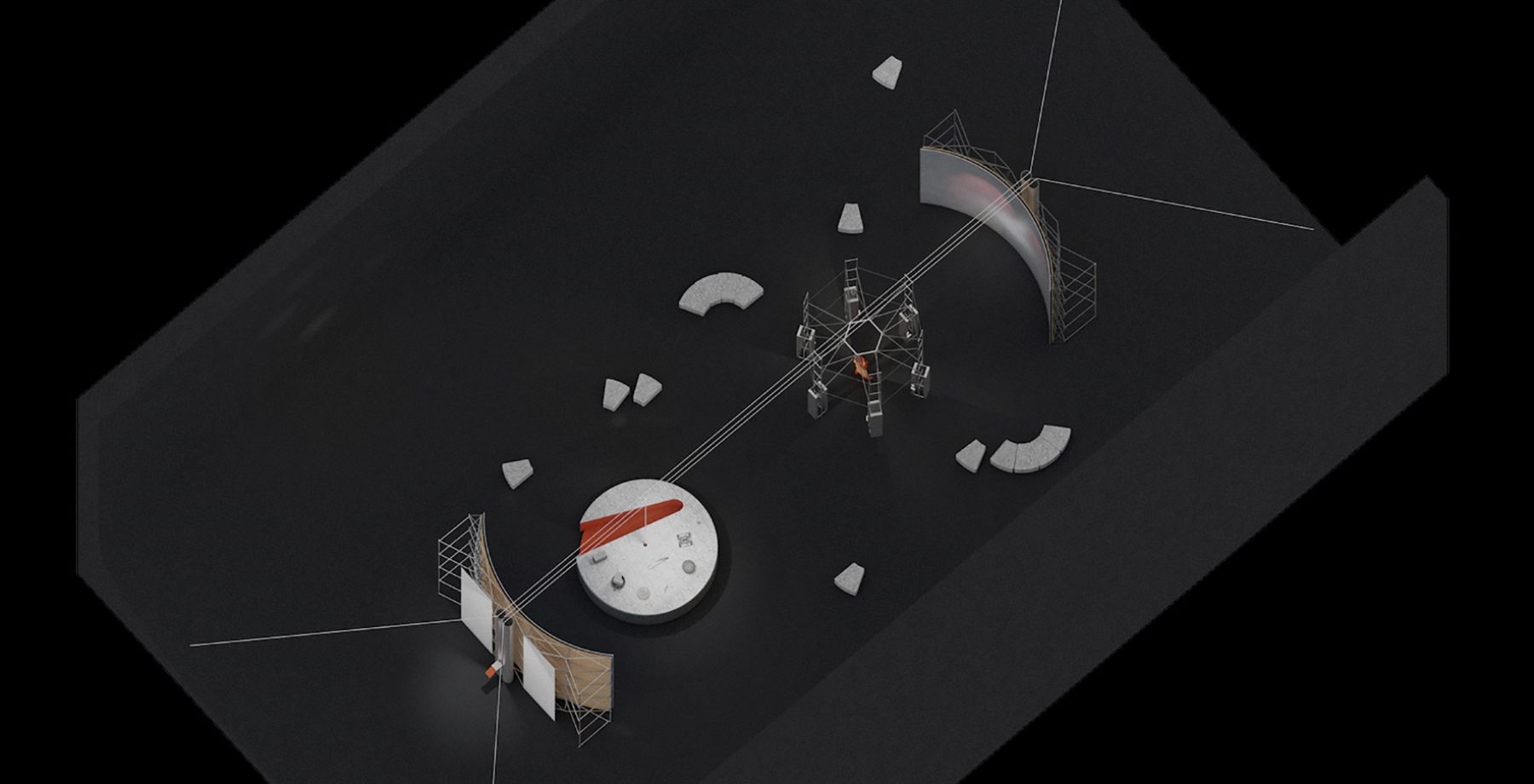
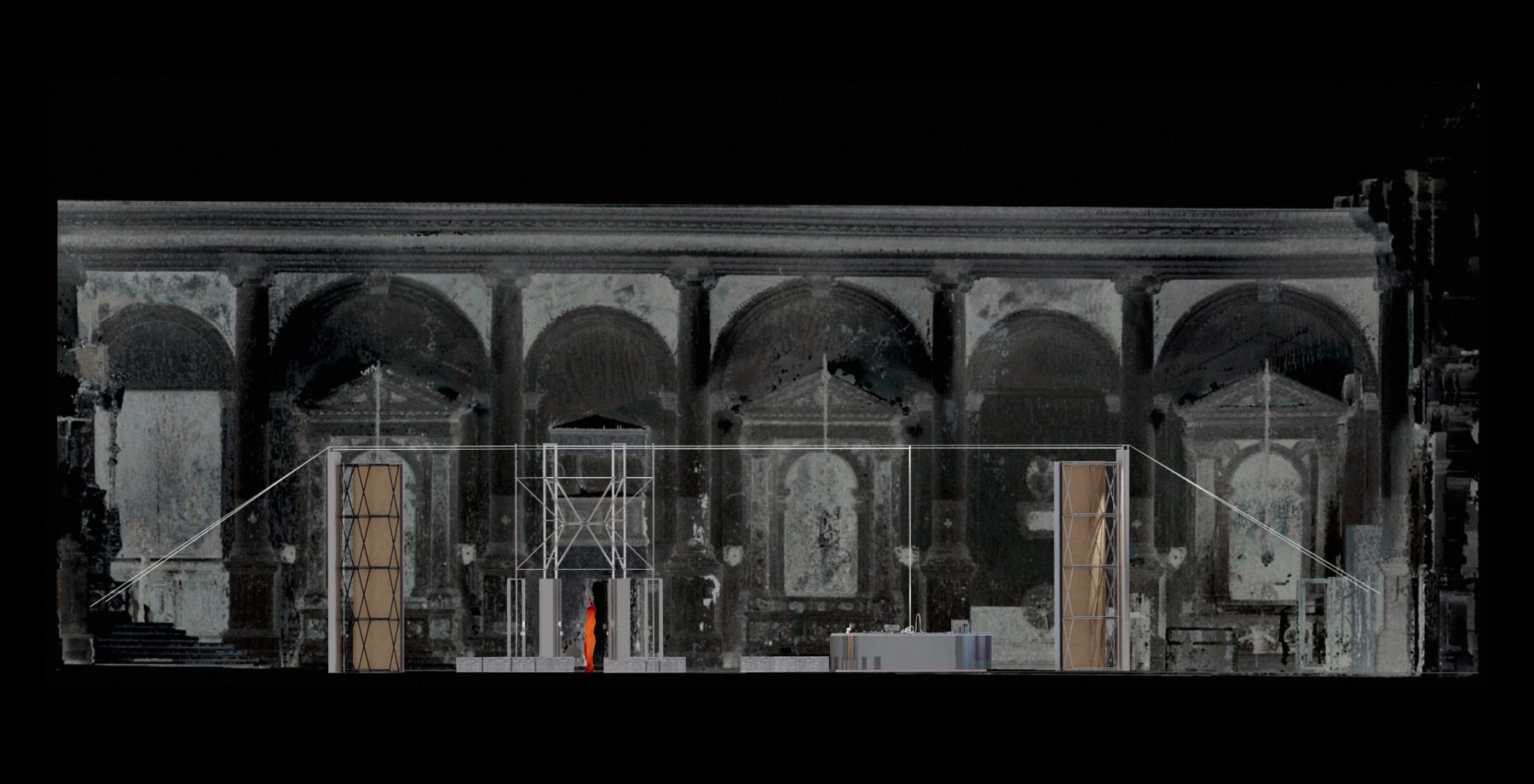
Her sound art compositions were performed and presented at different festivals and locations internationally. Since 2026 part of the research group “Orchestra of the future” at IRCAM, Paris. In 2023 she spent some time in New York City visiting public venues dedicated to body movement, classical and avant-garde music at the Juilliard School, Lincoln Center, MET and the streets of NYC among others. In 2021, her experimental audiovisual choreography was shown at the 17th Venice Architecture Biennale, where she investigated the characteristics and the conditions of the “overview effect”, while astronauts looking back on Earth.
She initially trained in dance, spending her early years on international tours with a Hungarian dance company until 1998-’99. After a long break, she continued to practice modern jazz dance and ballet at Tanzfabrik Berlin from 2009-2024. She holds a graduate degree in Media Art (M.A./Diplom) and in Media Philosophy (M.A./Diplom) from Karlsruhe University of Arts and Design, specializing in sound and acoustic spatial design. Prior to that, architectures studies at University of the Arts Berlin and at Technical University of Berlin, finishing her studies with B.Sc in architecture from TU Berlin. Her exploration of Brutalism and extended megastructures earned her an award in an architecture idea competition, before deciding that it was time to explore a different path.
- Experience
Ralph Appelbaum Associates
Ramicsoenario Exhibition Design
Waterstudio.NL
Hungarian State Opera
Schaubühne
STATION Berlin
Grips Theater
Werk5 (DAZ)
ZKM
Works.
-
”The Most Dangerous Games
We (Might) Play‘‘ reloaded
{2025-2026} under development
About the Project
DIY guitar- and cello-robots, realtime-composition, improvisation
Audiovisual sound performance, spatial sound Composition with DIY robotic-guitars 5-26‘
Credits: Kal Spelletich
Further development and orchestration based on prototypes of e-cello robotic instruments, as well as new development of DIY electric guitar
Orchestration of E-Cello and E-Guitar
Genre: Avant-garde, industrial, phychedelia
Distortion, reverb, echo, Wah-Wah
Spatial-Version: Ambisonics spatial audio in Reaper (IEM) 3-12-channel, 44- channel version (Klangdom)
By blending different techniques and musical genres, the improvisational composition process aims to evoke the spirit of psychedelic rock, where this soundscape brings people together.
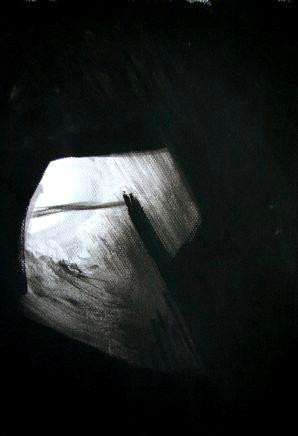
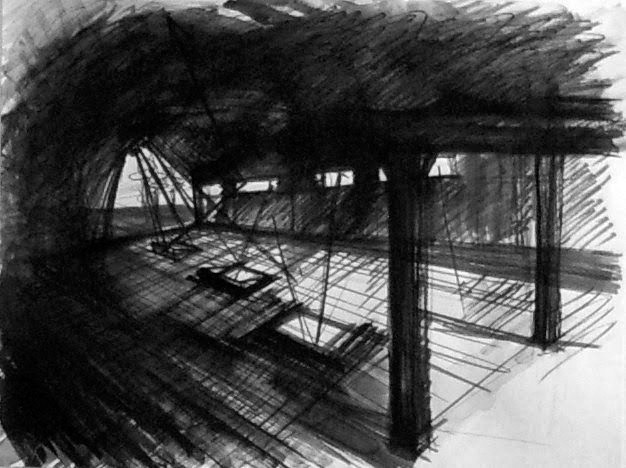
A robotic instrument, which was developed as a kind of extension of the body. It is partly made of scrap metal and inexpensive steel materials, and is self-built. My audiovisual performance was first presented at the ZKM Kubus, then as an orchestral version at the NYCEMF 2025.-’26. This idea has been taken to the next level, by building a DIY guitar, that pushes the the boundaries further to reach the desired “phychedelic” sound.
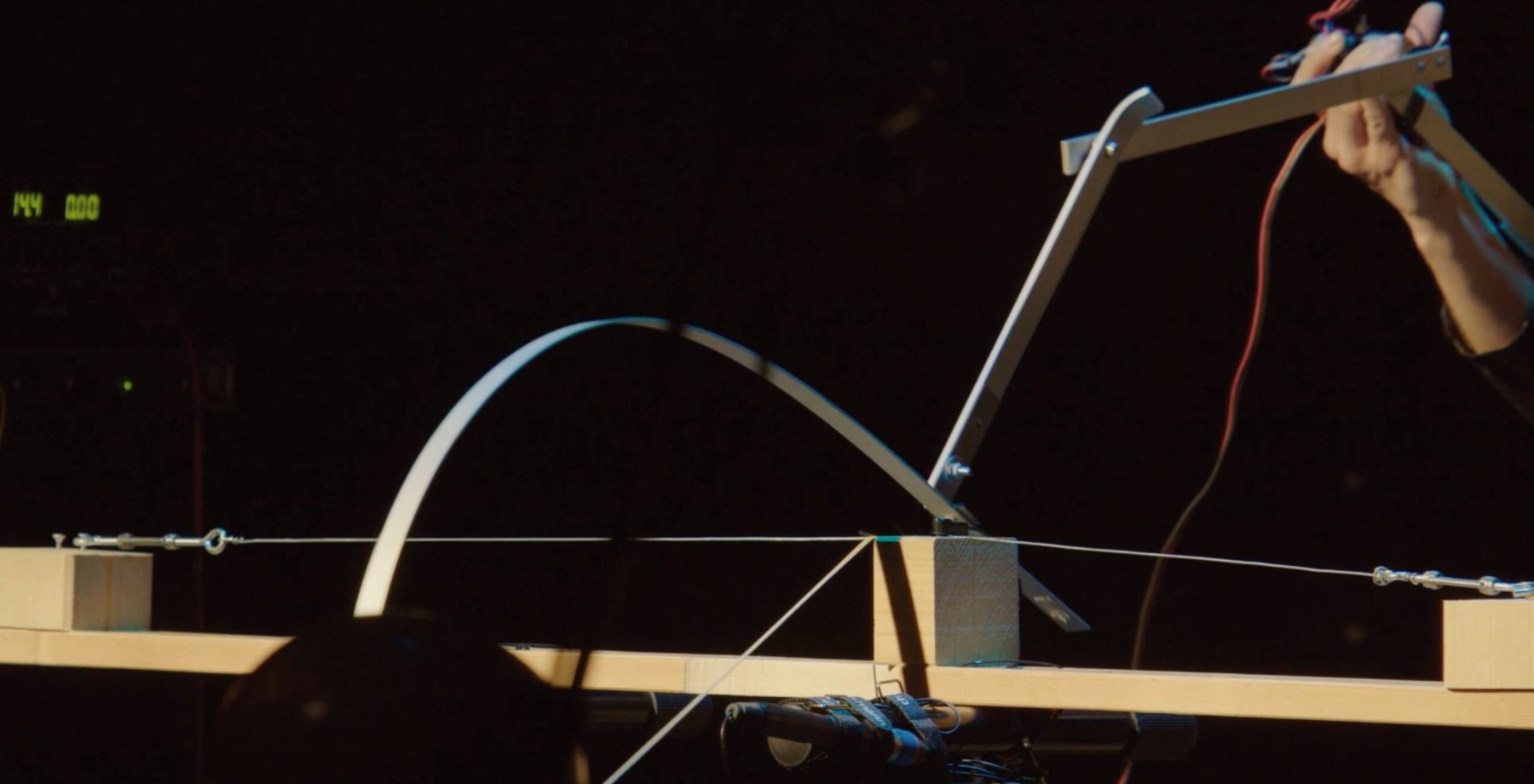
Combining various raw material components, I create new sound bodies for my instruments. The use of rusty wire instead of cello strings produces a kind of fractured soundscape, while the motors and physical construction of the instrument create new possibilities for generating sound. I play one or more instruments manually myself, while I am orchestrating the robotic ones.
-
The Most Dangerous Games
We (Might) Play
{2023-2025}
About the Project
Real time composition 5’-23′
Audiovisual solo performance with
DIY robotic cellos
Inspired and mentored by Kal Spelletich,
who is also the inventor of the robotic E-cello prototypes
Orchestration, further development,
tonal development of E-cello:
Éva B. Csonka
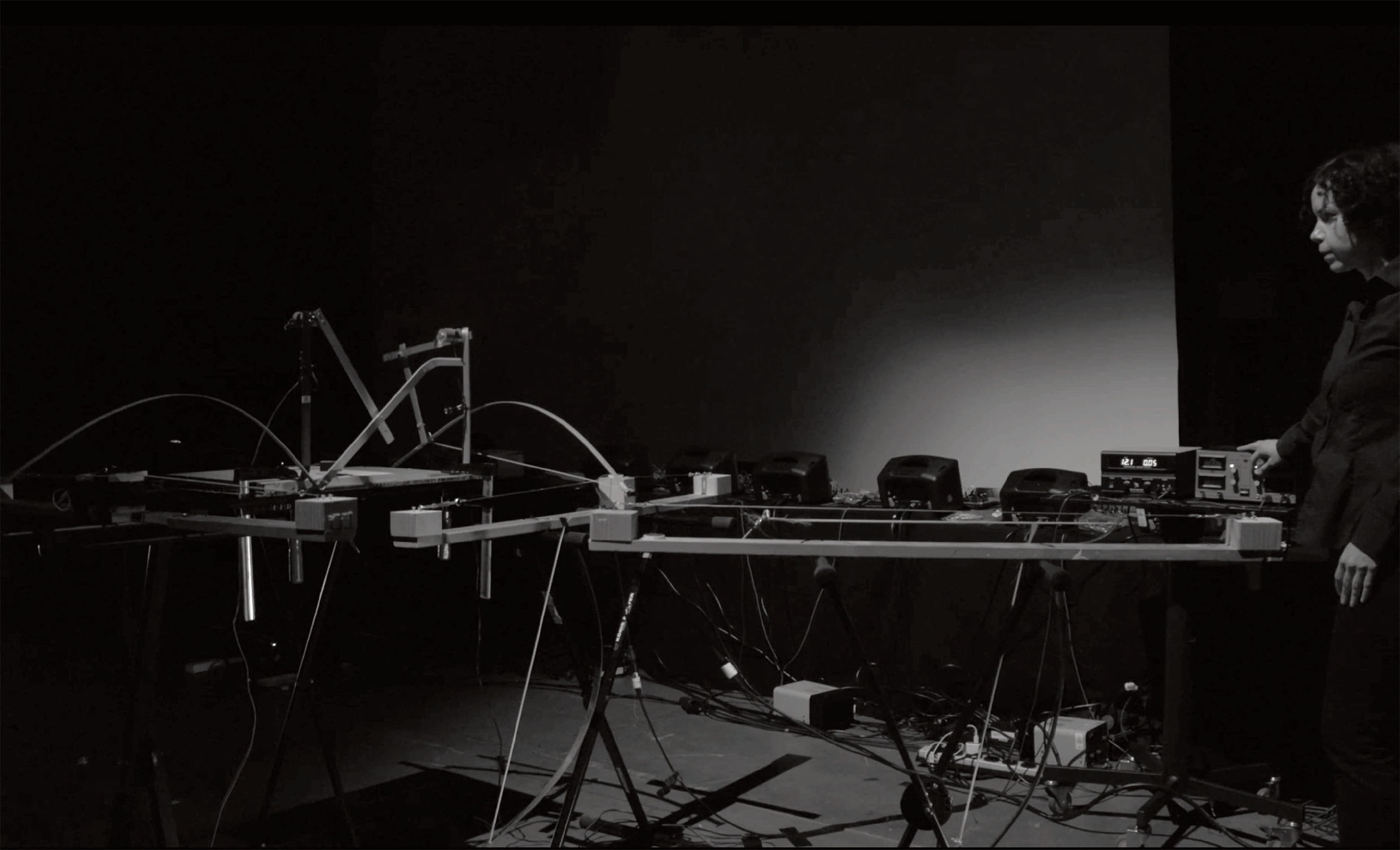
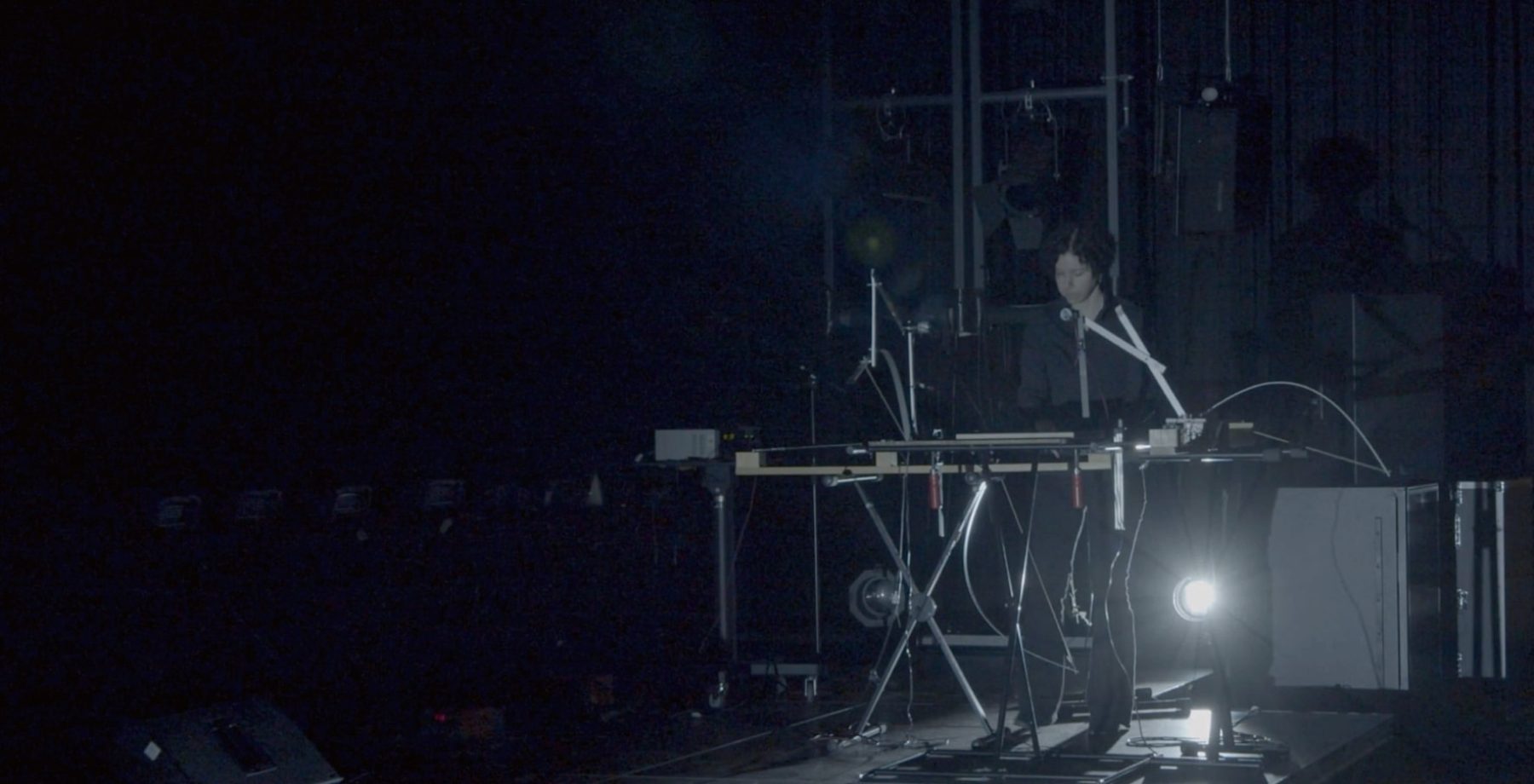
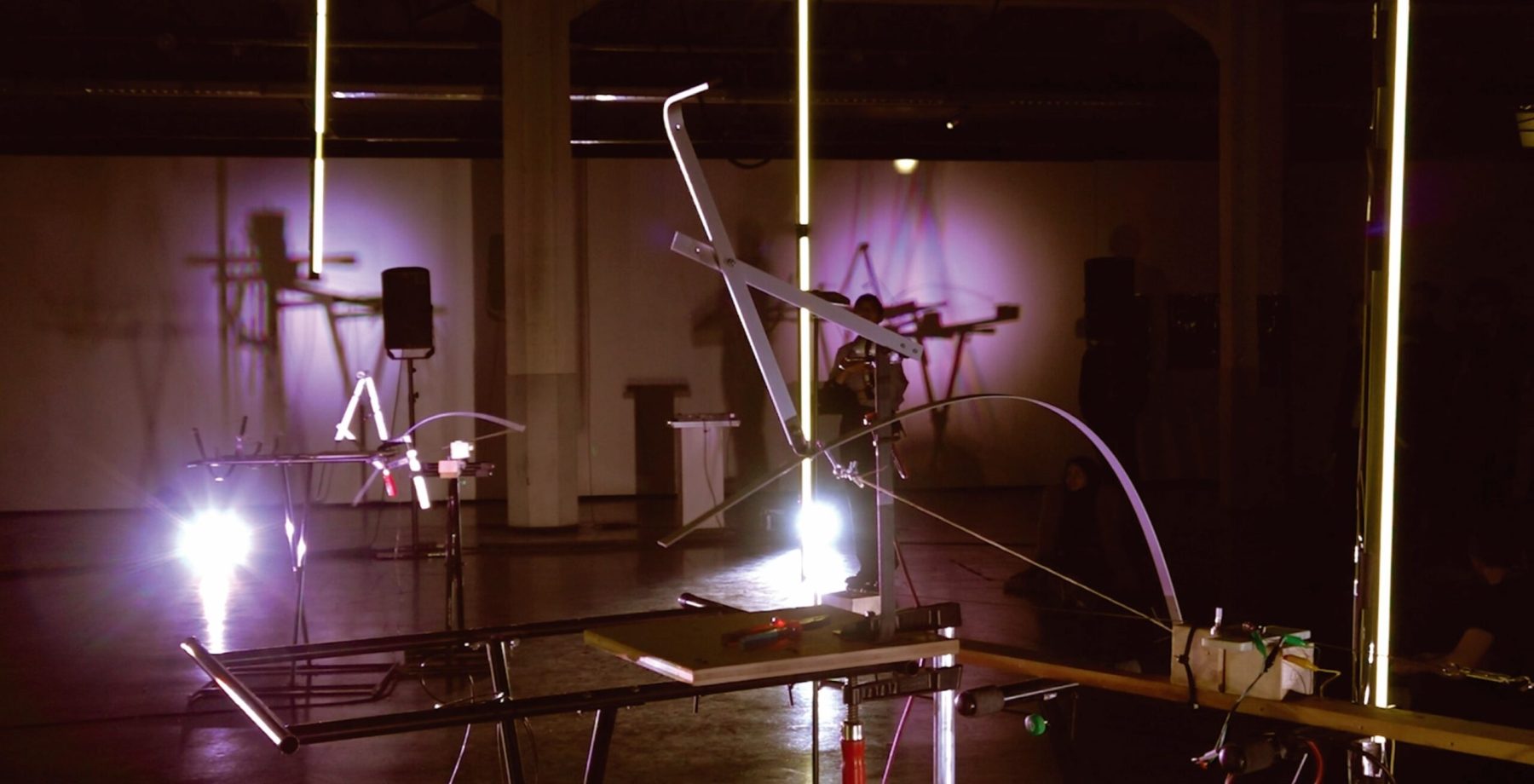
The piece begins with giving continuous inputs to an electric orchestra. As the score begins to play, the sound of the cellos starts to occupy the physical space with their immediate presence. New behaviors begin to emerge, and the robotic instrument slowly creeps towards its operating limits with an ever-shorter series of signals. Gravity and (im)balance are becoming visible and audible. By choosing a fragile self-made robotic instrument we use sound and movement to explore the implications of an uncertain physical presence: as the rhythmic density and diversity of the cellos continues to increase, the overlapping and mutually interfering inputs to the robot’s engine lead to a chain reaction that escalates into a chaotic dance of the machines creating their own sound world.
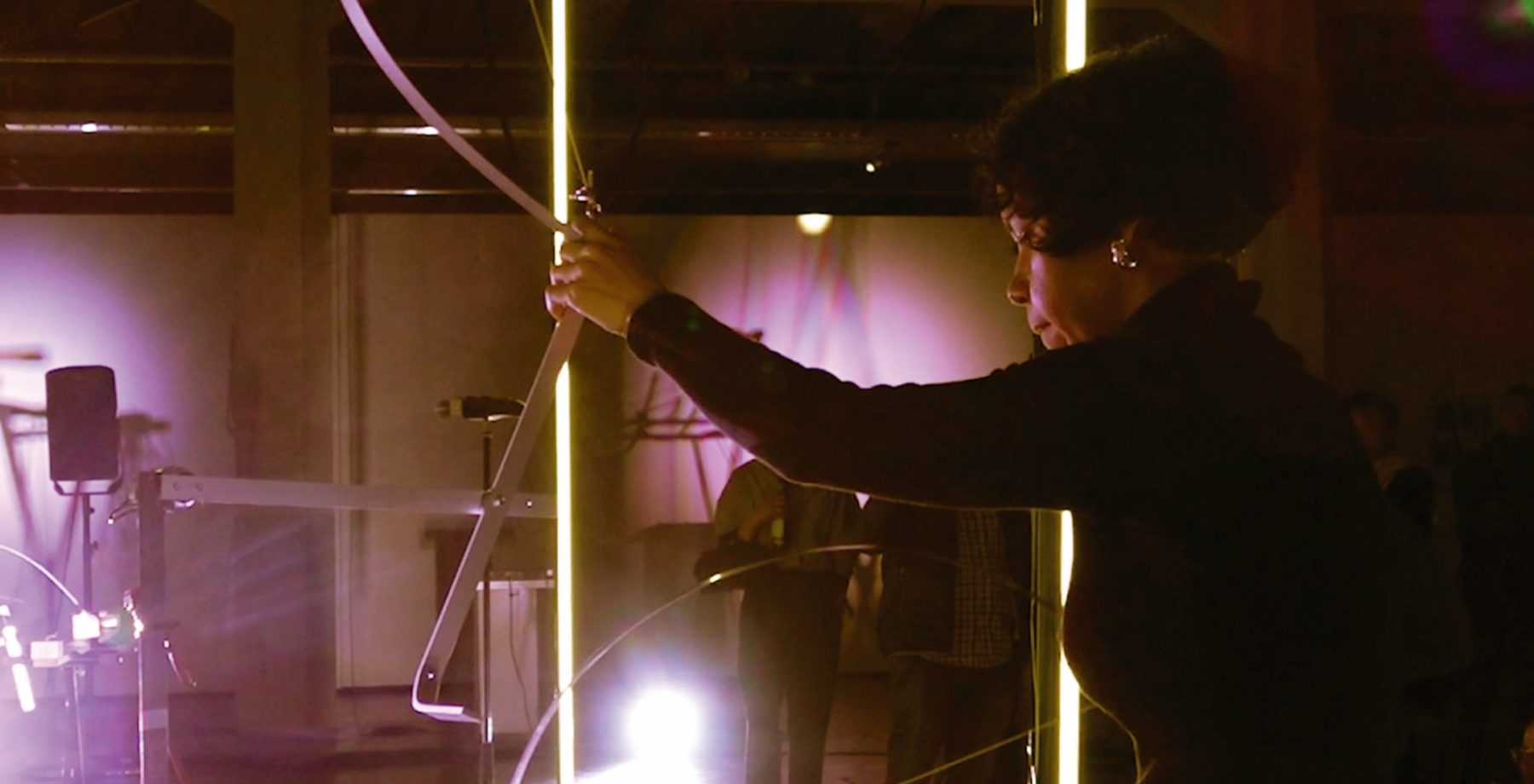
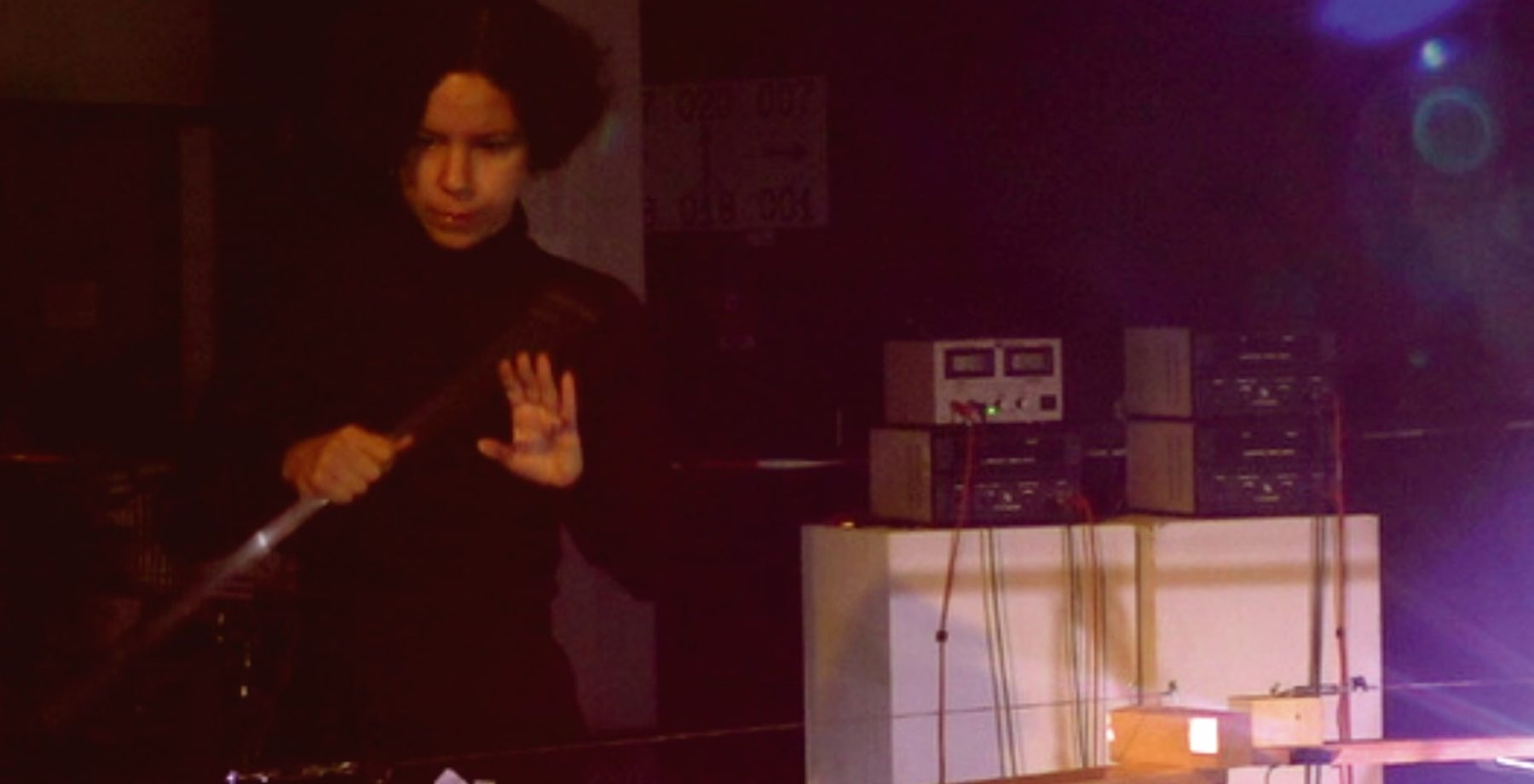
There is a never-ending loop between the “machine operator” aka performer and the sound installation itself that keeps the flow going. Changing the speed and operating habits is a way of dictating the rhythm and managing the score in real time. Tuning two of the motorized cellos so that their high and low notes (basses) complement each other vocally, while at the same time a competition-like scenario arises between the instruments as we change their speed and playing limits.
Instead of using fully capable industrial robots I refrain to construct self-made models instead, while utilizing only the most basic forms of movements. In order to gain the performative potential of these robots and their musical character, I assemble various raw-materials into new instrumental bodies and deconstruct to their core elements. I start by playing with the shape, the dimensions and the height of the monochord, and with the distance between the instrument ́s body and the bow.
The interest is in features such as gravity and (im)balance, as well as how far the boundaries can be pushed and indeed what are they? By bringing these instruments together in different scenarios and settings, I aim to explore their physical presence and relationships as a whole. I play one or two cellos by myself manually as I am orchestrating the robotic ones during the concert. I produced a large-scale adaptation of the idea at the Karlsruhe University of the Arts for my graduation thesis, where the audience was able to enter the soundscape during the performance.
Professors: Michael Bielicky, Barbara Kuon, Paul Modler, Lorenz Schwarz, Gerriet K. Sharma, Kal Spelletich, Joao Tabarra and Lioudmila Voropai
Lightning Design: Dina Reis
Poster Design: Rebecca Zink
Video: Rui Zhang
Special thanks to: Dieter Sellin and Susanne Schmitt
Links:
https://medienkunst-sound.de/works/the-most-dangerous-games-we-might-play
- 17th Architecture Biennale Venice, 2021
{2021}
About the Project
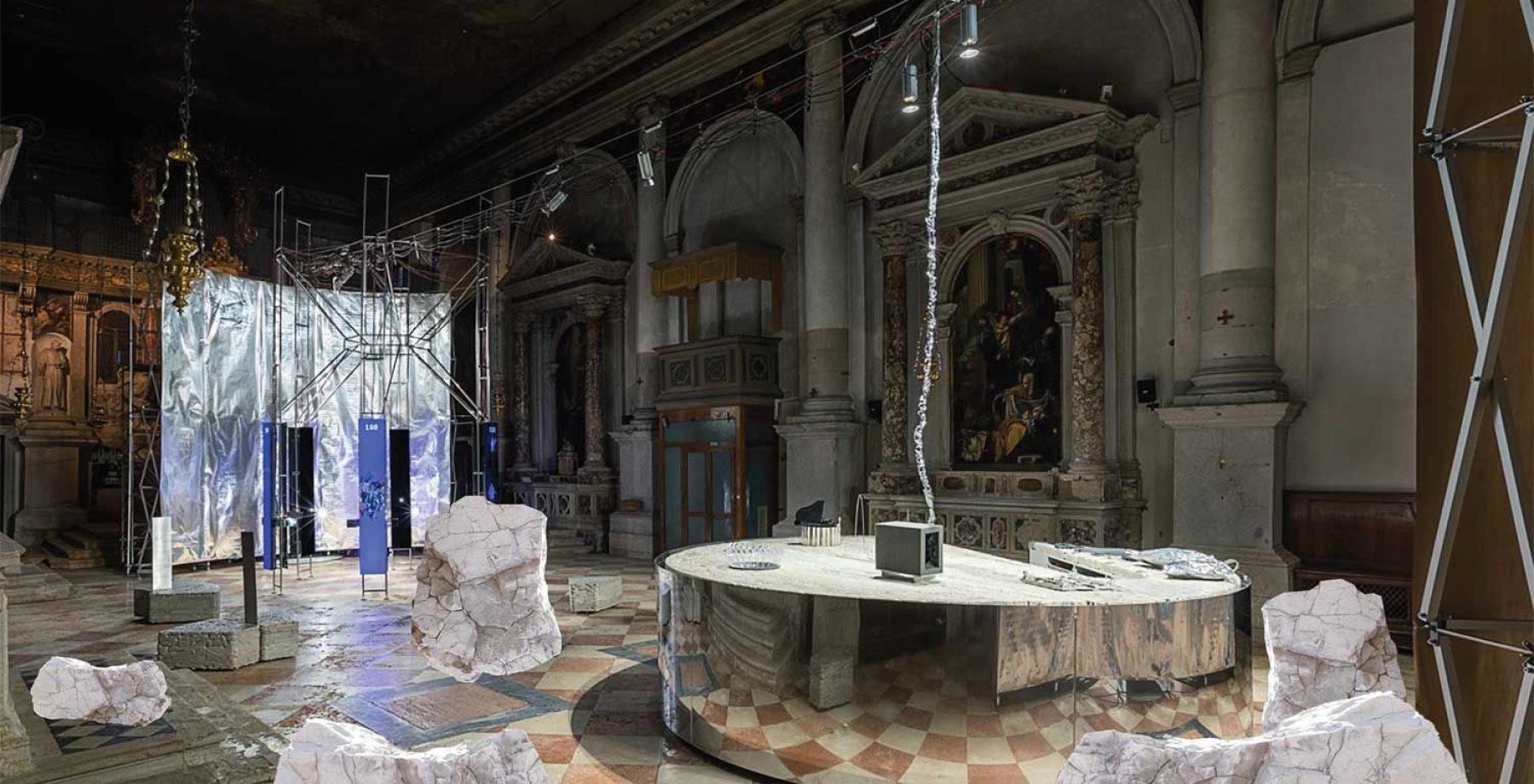
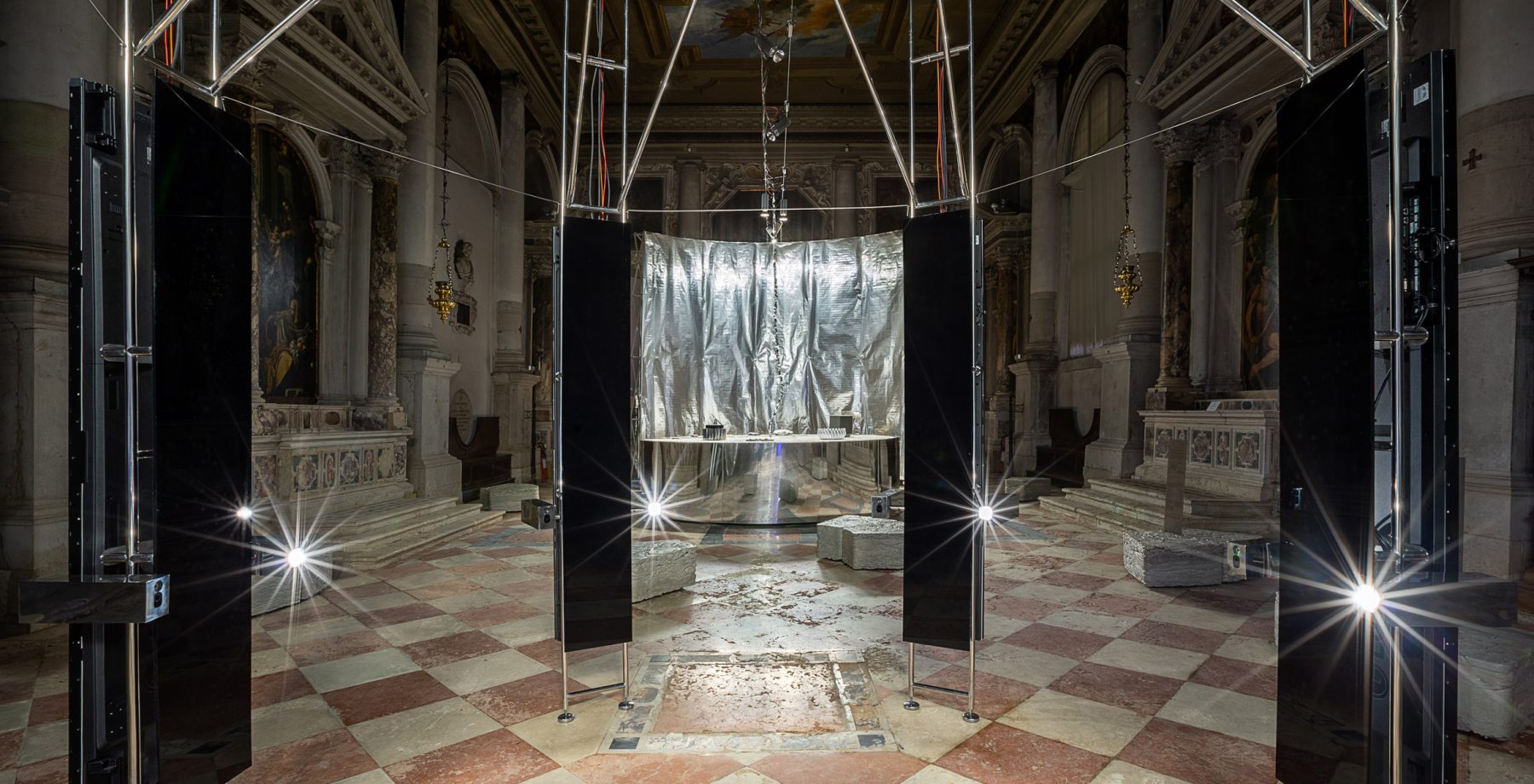
LIQUID Cosmos, “THE ZONE” (Live Dance Performance)
Choreography and Idea by Éva Csonka
By creating a space-like atmosphere with delayed time and weightless movements, a group of bodies will attempt to establish and identify themselves in this spacetime-continuum. The idea is based on the so-called overview-effect, where that astronauts find themselves, while looking back to Earth from space. The performance is placed into an imaginary unknown terrain where the question arises how much our social conditioning and habitual programming will we retain and to what extent are we willing to allow new changes? According to Einstein’s general theory of relativity, parallel words could exist. There could be also multiple versions of us. Are our limits an illusion, what is „real“ and how do we perceive it?
Production: HfG Karlsruhe, Biennale Venice, Éva Csonka
Dancers: Thomias Radin and Charlotte Virgile
Singer: Magdalena Kuba Gromada
Sound Design: Nic Eßer and Tina Jander
Site: Lithuanian Space Agency (LSA)
Scenography: LSA
Professors: Michael Bielicky, NAHUM, Jan Boelen
Curator: NAHUM
Special thanks to Viktoria Volozhynska and Dominique Wenzel
Timeline.
- Nov 5-7 2026
Light Art Symposium / 30th anniversary of the International Kepes Society (IKS), guest speaker, Moholy Nagy University of Art and Design (MOME), Budapest
- Get Tickets 🡥
- Nov-December 2026
iMal Residency, European Media Art Platform (EMAP), Brussels
- Get Tickets 🡥
- 18. Sept 2026
Seoul International Computer Music Festival, Chamber Hall, Yonsei University, Seoul
- Get Tickets 🡥
- 11. Sept 2026
SHIP Festival, Sibenik- cancelled
- Get Tickets 🡥
- 25. June 2026
NYCEMF - New York City Electroacoustic Music Festival, Loreto Theater, New York
- Get Tickets 🡥
- June 2026
IRCAM Manifeste Academy, AI composition workshop with Simone Conforti composing with Agent RAVE, Paris
- Get Tickets 🡥
- May 2026
EMAP-conference, Braga
- Get Tickets 🡥
- 28. June 2025
NYCEMF - New York City Electroacoustic Music Festival, Frank Shiner Theater, New York
- Get Tickets 🡥
- June 2025
IRCAM - Presentation on composition work at Manifeste Academy, Paris
- Get Tickets 🡥
- 2025
BEYOND CULTURE - INSIDE SONIC concert in cooperation with University of Cape Town
- Get Tickets 🡥
- 2024
Robotic Soundscape: lnteractive Robotic Sound Art Performance with Kal Spelletich, Karlsruhe
- Get Tickets 🡥
- 2024
"next generation X" Festival ZKM Kubus, Karlsruhe
- Get Tickets 🡥
- 2023
rOundabOut Concert, ZKM Kubus
- Get Tickets 🡥
- 2023
Choreography workshop with Sasha Waltz & Guests
- Get Tickets 🡥
- 2023
MK-Concert "Ultrasound" University of Music, Gottesaue Castle
- Get Tickets 🡥
- 2021
17th Architecture Biennale Venice
- Get Tickets 🡥
Media.
- Robotic Soundscape
{2024}
Interactive Robotic Sound Art Performance with Kal Spelletich, Karlsruhe
- Robotic Soundscape
{2024}
Interactive Robotic Sound Art Performance with Kal Spelletich, Karlsruhe
- Robotic Soundscape
{2024}
Interactive Robotic Sound Art Performance with Kal Spelletich, Karlsruhe
- Robotic Soundscape
{2024}
Interactive Robotic Sound Art Performance with Kal Spelletich, Karlsruhe
- Robotic Soundscape
{2024}
Interactive Robotic Sound Art Performance with Kal Spelletich, Karlsruhe
- Robotic Soundscape
{2024}
Interactive Robotic Sound Art Performance with Kal Spelletich, Karlsruhe
- Robotic Soundscape
{2024}
Interactive Robotic Sound Art Performance with Kal Spelletich, Karlsruhe

- Robotic Soundscape
{2024}
Interactive Robotic Sound Art Performance with Kal Spelletich, Karlsruhe